
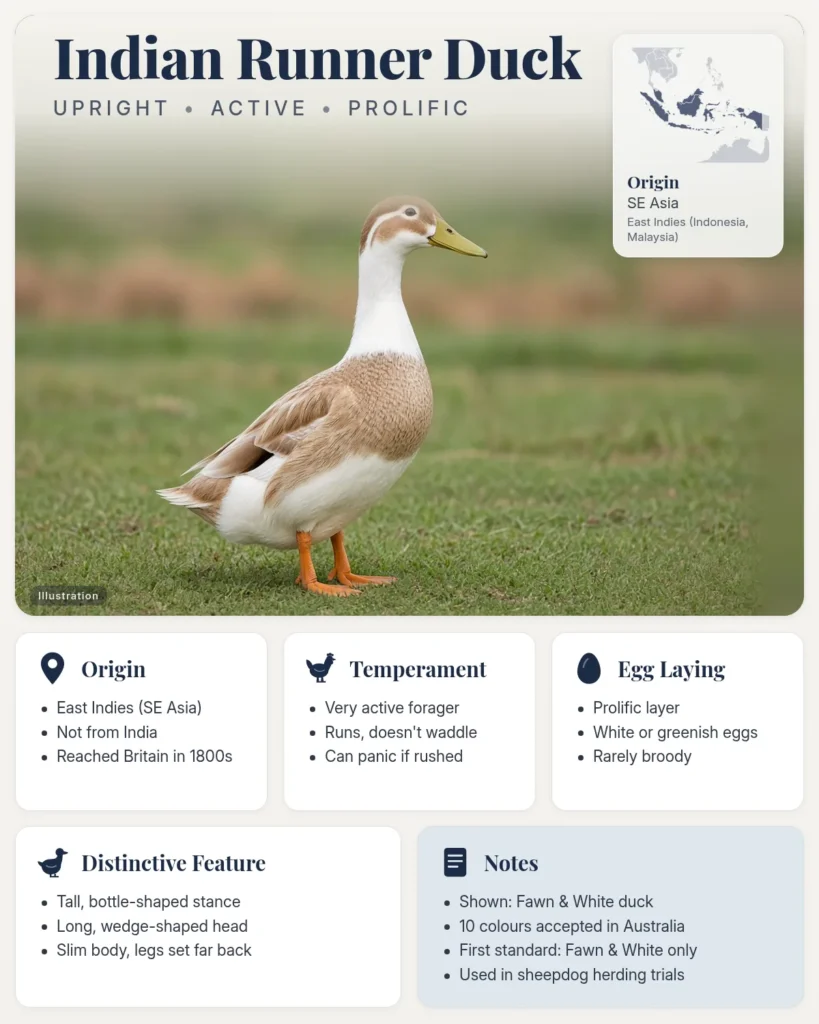
History & Origin
Native to Indonesia, specifically the islands of Java and Bali, the Indian Runner Duck is one of the most distinctive poultry breeds in the world. Their history dates back centuries, where they were traditionally herded in large flocks across rice paddies to forage for snails and insects. They were brought to Europe in the mid-1800s, where they fascinated poultry keepers with their unusual appearance and incredible laying ability.
Temperament & Behavior
Indian Runner Ducks are active, intelligent, and highly alert foragers. Unlike most ducks that waddle, Runners have a unique, upright posture that allows them to run—a trait that makes them exceptional at covering large areas for food. They are generally shy and easily startled, but they are also very social and thrive in a flock. Their busy nature and constant movement make them entertaining additions to any garden or farm.
What Makes Them Special?
Often referred to as the “bowling pin” of the duck world, the Indian Runner is iconic for its vertical stance and slim, elongated body. They don’t have the heavy waddle of other ducks; instead, they move with a quick, agile gait. This breed is also famous for its wide variety of color patterns and its ability to cover large distances without tiring. Their slender profile and upright walk make them truly unmistakable.
Egg & Utility Facts
The Indian Runner is a prolific layer, often called the “Leghorn of the duck world.” They are world-class egg producers, consistently laying a high volume of large, white or greenish eggs throughout the year. Their foraging skills are unmatched, making them one of the best breeds for natural pest control. They are efficient birds that require less feed than heavier breeds while providing a high return in egg production.